
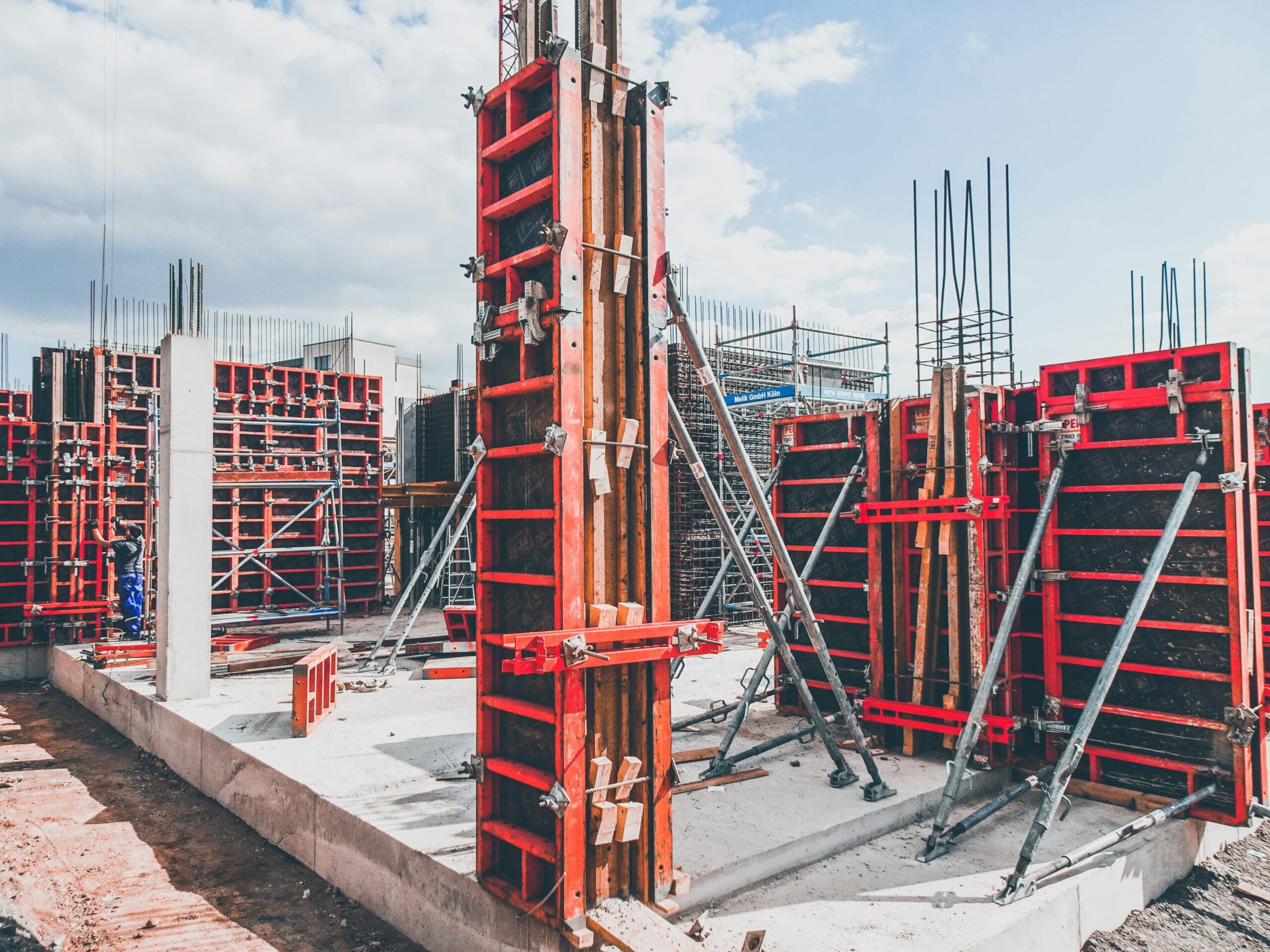
Scaffolding is one of the most essential yet often underestimated components in the construction process in Ghana. It provides the temporary structure that allows workers to safely access elevated parts of a building during plastering, painting, structural adjustments, and finishing works. Without it, construction becomes not only inefficient but also significantly more dangerous.
In practice, scaffolding is not just a technical requirement but a financial decision. Contractors must choose between renting scaffolding for short-term use or investing in fabrication and ownership. This decision has a direct impact on project costs, timelines, and long-term profitability.
The Role of Scaffolding in Construction Work
In any construction project, scaffolding acts as the backbone of safe elevated access. It supports workers, tools, and materials while allowing smooth movement across different levels of a building. This improves productivity and reduces the physical strain on workers, especially in multi-storey developments.
More importantly, scaffolding plays a critical role in safety. Working at height without proper structural support significantly increases the risk of accidents. Properly installed scaffolding, combined with supervision and safety equipment, helps reduce these risks and ensures compliance with basic construction safety standards.
Common Types of Scaffolding Used in Ghana
In the Ghanaian construction environment, three main types of scaffolding are commonly used. Bamboo scaffolding remains the cheapest option and is often used for very small or temporary projects. It is easy to assemble but lacks durability, especially under harsh weather conditions.
Wooden scaffolding is a step above bamboo in terms of strength and stability. However, it requires skilled carpentry for proper installation and is vulnerable to rot and structural weakening when exposed to moisture over time. This makes it less reliable for long-term or large-scale projects.
Galvanized steel scaffolding is the most durable and professional option. Although it requires a higher initial investment, it provides excellent stability, can withstand heavy loads, and can be reused multiple times across different projects. This makes it the preferred choice for serious contractors and developers.
Understanding Scaffolding Rental Costs in Ghana
Scaffolding rental is widely used in Ghana because it appears affordable at the beginning of a project. However, the pricing structure is often based on daily or unit-based charges, which can quickly accumulate.
For example, if a contractor requires twelve units of scaffolding at an average rate of approximately sixty Ghana cedis per unit per day, the total daily cost becomes around seven hundred and twenty Ghana cedis. Over a period of just twenty days, this amounts to approximately fourteen thousand four hundred Ghana cedis.
In reality, construction projects rarely proceed without delays. Weather conditions, material shortages, design changes, and labour issues often extend project timelines. As a result, scaffolding rental costs can increase significantly beyond initial estimates, placing financial pressure on contractors.
The Cost of Fabrication and Ownership
Fabricating a galvanized steel scaffolding system typically requires an initial investment of around fifteen thousand Ghana cedis for a medium-sized setup. While this appears higher than short-term rental costs, the long-term financial comparison tells a different story.
In many cases, the cost of ownership reaches a break-even point in roughly twenty days of continuous use. Beyond that point, every additional day of use represents savings compared to rental.
Unlike rental, ownership eliminates recurring payments. The scaffolding becomes a reusable asset that can be deployed across multiple phases of construction, including plastering, painting, and maintenance.
Rental vs Ownership: A Practical Comparison
Renting scaffolding offers flexibility and lower upfront costs, making it attractive for small or one-time projects. However, its main drawback is the lack of long-term value. Every new project or delay increases costs, and the contractor gains no asset in return.
Ownership through fabrication, on the other hand, requires more capital initially but provides long-term financial stability. The scaffolding can be reused on future projects, rented out to other contractors, or even sold when no longer needed. This turns it from a cost into an investment.
For contractors handling multiple projects or longer construction timelines, ownership consistently proves more economical and strategically sound.
Safety and Operational Considerations
Regardless of whether scaffolding is rented or owned, safety remains a critical factor. Proper installation, regular inspection, and the use of protective equipment such as helmets and harnesses are essential to reduce risks on-site.
Supervision also plays a key role. Workers must be properly guided to avoid unsafe practices, especially when working at height. A well-managed scaffolding system not only improves safety but also enhances overall project efficiency.
Why Steel Scaffolding is Becoming the Standard
Across Ghana’s construction industry, galvanised steel scaffolding is increasingly becoming the preferred choice for professional contractors. Its durability, reusability, and structural strength make it suitable for both small and large-scale developments.
It also provides better long-term financial value by reducing repeated rental costs and improving operational efficiency. Over time, it becomes a core asset within a contractor’s equipment inventory rather than a recurring expense.
Scaffolding is a strategic financial decision. While renting may seem convenient in the short term, it often becomes expensive over time due to project delays and extended usage.